Goya's Matador
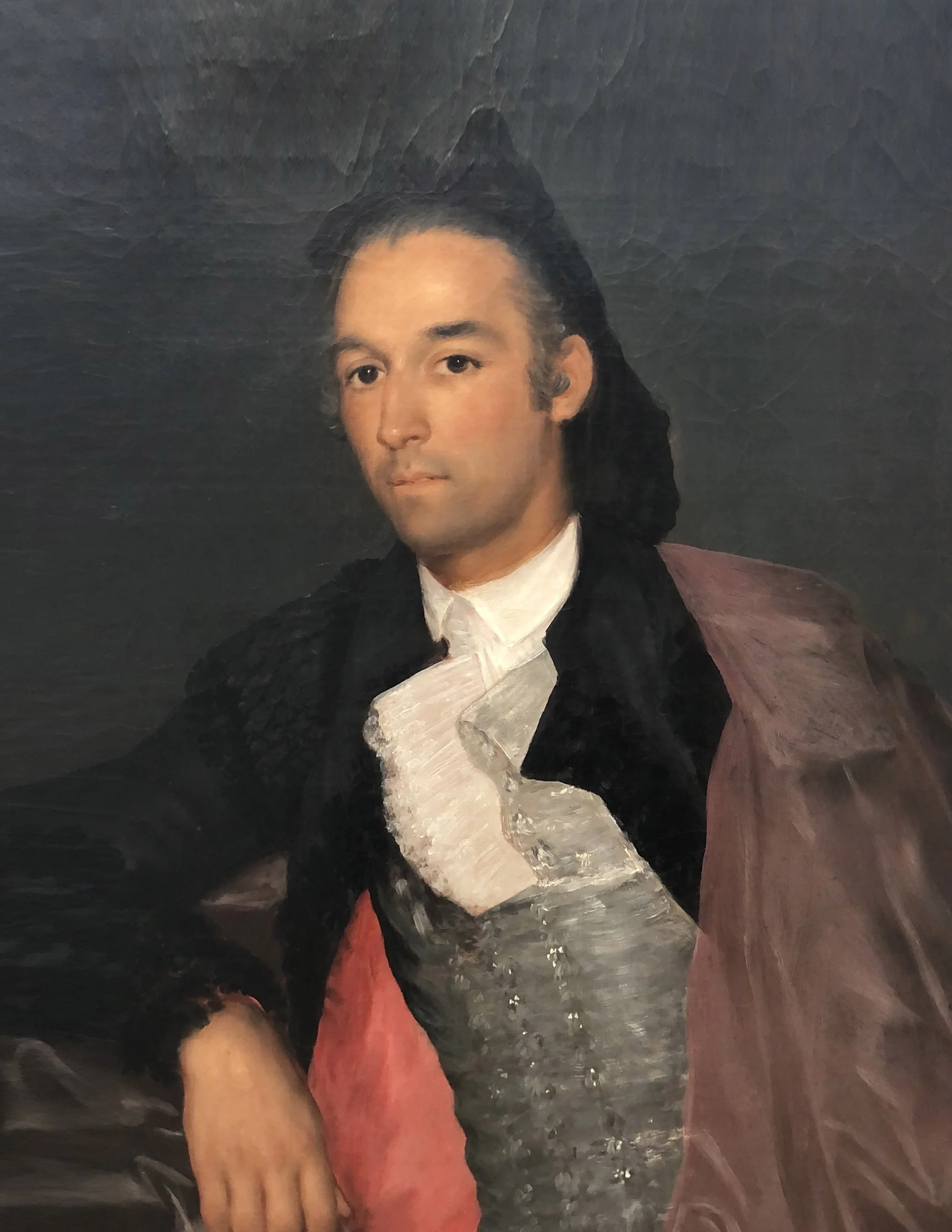
His mouth is open in a restrained snarl. He is a predator, barely contained in the finery of his vestments.
This is Francisco Goya's portrait of Pedro Romero (c. 1795–98), Spain's legendary matador, sitting for a portrait just before retiring at age forty-five. He is wearing his Traje de Luces, his Suit of Lights, for the arena. His stiffened Chaleco or vest, protects him, holding him erect, like an armored column.
A Decepitive Gaze
He is young, though not so young to be unaware of death. A certain tautness betrays his apparent insouciance. His right hand appears relaxed. His left eye is softly focused. But this is a feint, like the matador’s cape. His right eye calculates your position to within an inch.
The Tarnish of Age
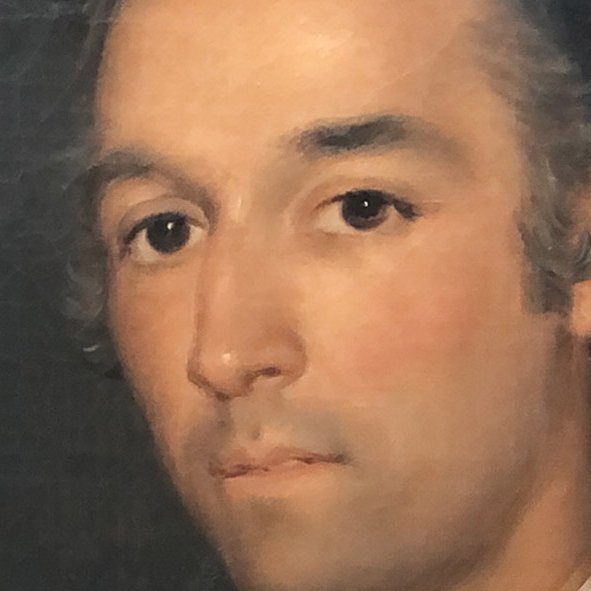
This is an unusually polished portrait for Goya. Almost in the manner of his French, classicist contemporary, Jean Auguste Dominique Ingres, there is a deep, South Sea pearl background. Its complement reflects highlights of vermillion into Romero’s face, while at the same time casting a tarnish into the silver hair at his temples.
La Tauramaquia
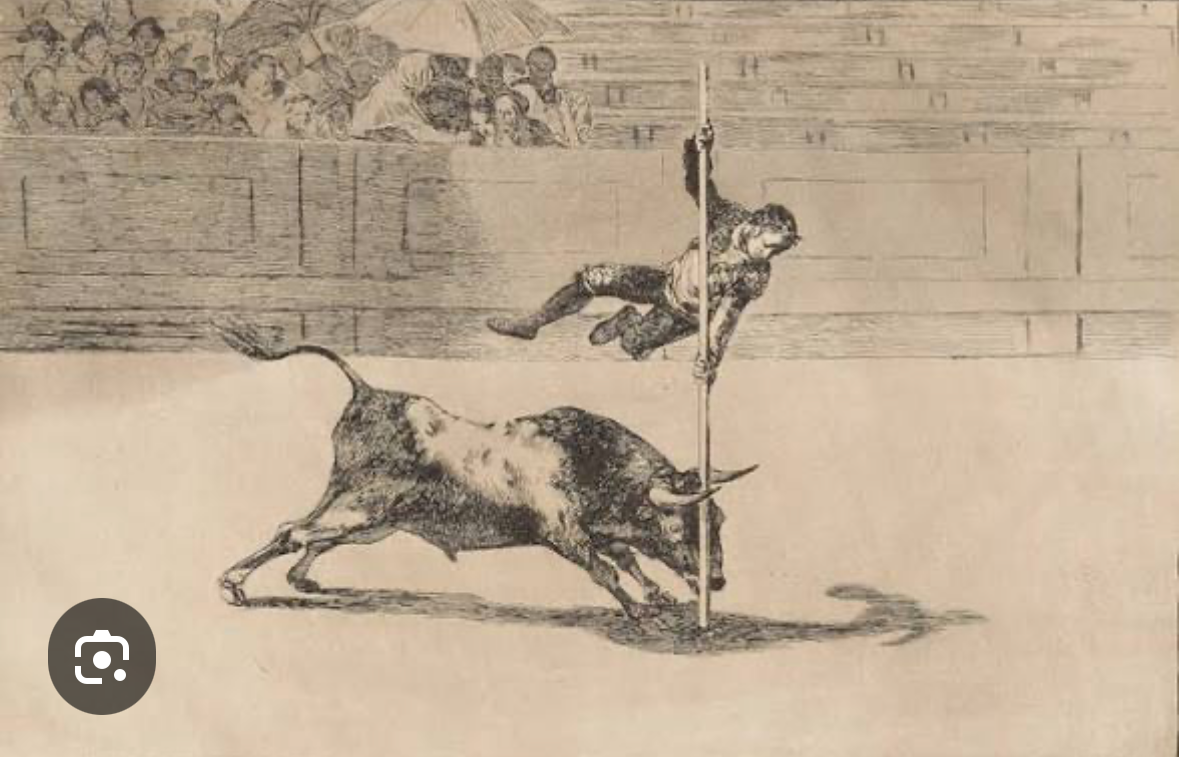
This was an exceedingly important portrait, for an exceedingly important topic. Goya had just completed La Tauramaquia, a series of thirty-three prints depicting the heroic and sometimes tragic events of the bullfight.
The entire disquieting, violent, virtuous, exalted and sacrificial culture of LaTauramaquia inhabits this painting.
Goya's Portrait of the Matador Pedro Romero, (c. 1795–98), can be found in Fort Worth, Texas, at the Kimball Art Museum, Louis Kahn's masterwork, where the artwork is bathed in diffused daylight from the cast concrete vaults above, see Louis Kahn: Building and Being.