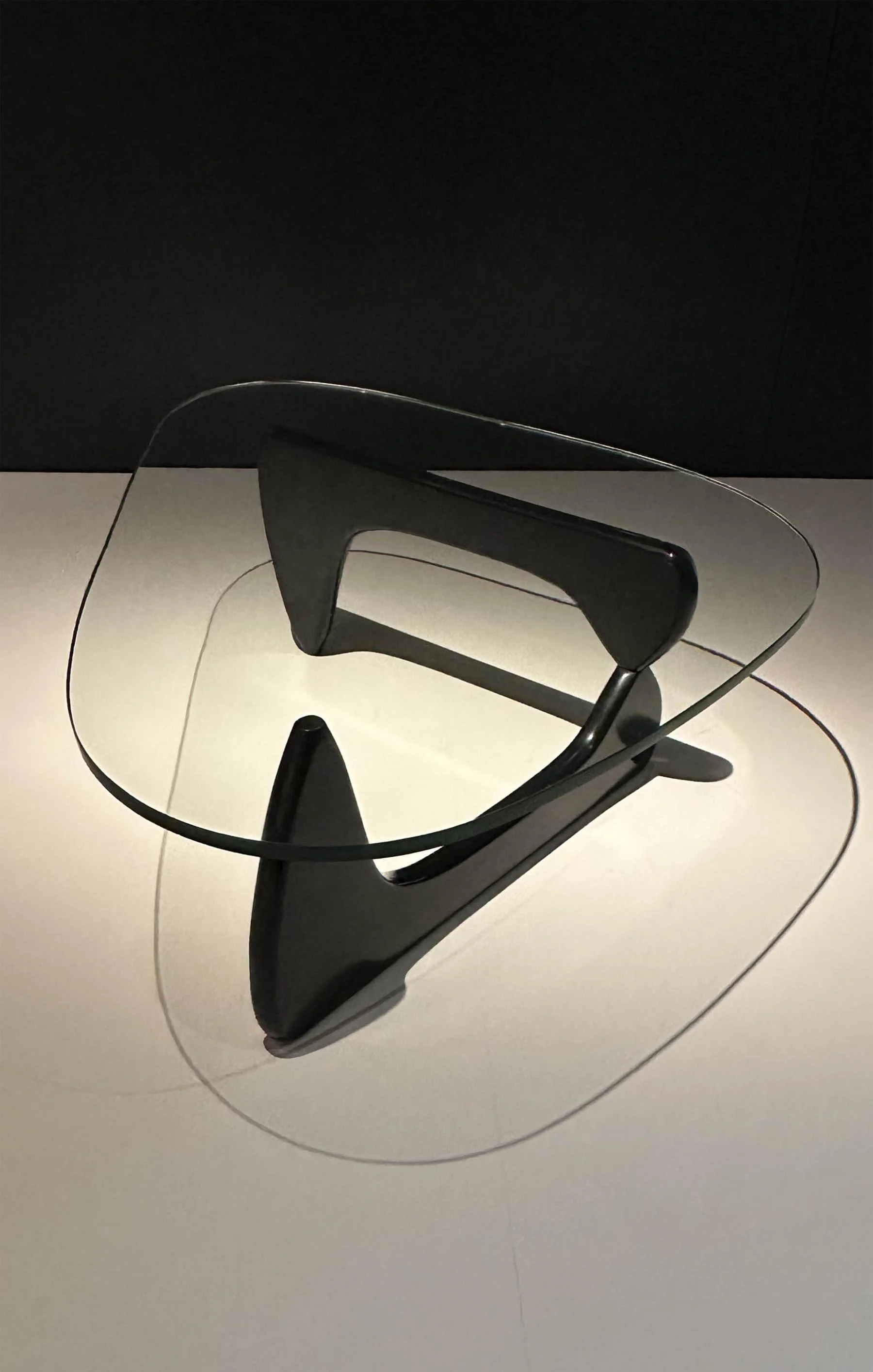
Isamu Noguchi
The IN-50 Coffee Table (1944)
Between art and nature: how the natural world comes to resemble our own.
Objects as Artifacts
Curves reminiscent of Miro, weightlessness of Calder, its seeming contrapposto, the insouciance of the age. So much of the hope and aspiration of the age is apparent in the furniture pieces. Imagine couples sitting around the living room floor, getting hip to modern life, experimenting with transcendental meditation, marijuana, and free love. It’s the stuff of a John Updike novel, that we now see in a nostalgic, if melancholy light.
Isamu Noguchi's industrial designs can be seen as artifacts, cultural insignia of the times, the aspirations and myths, liberated by technology, with a yearning for "open space" floor plans.
Yet, to see the broad expanse of Noguchi's work, now in an exhibition at the Peabody Essex Museum, titled, I am not a designer* is to see beyond the tropes of mid-century modernism, or “MCM” as it is now referred to, into the genius of an artist working without boundaries across the realms of art, design, landscape and architecture.
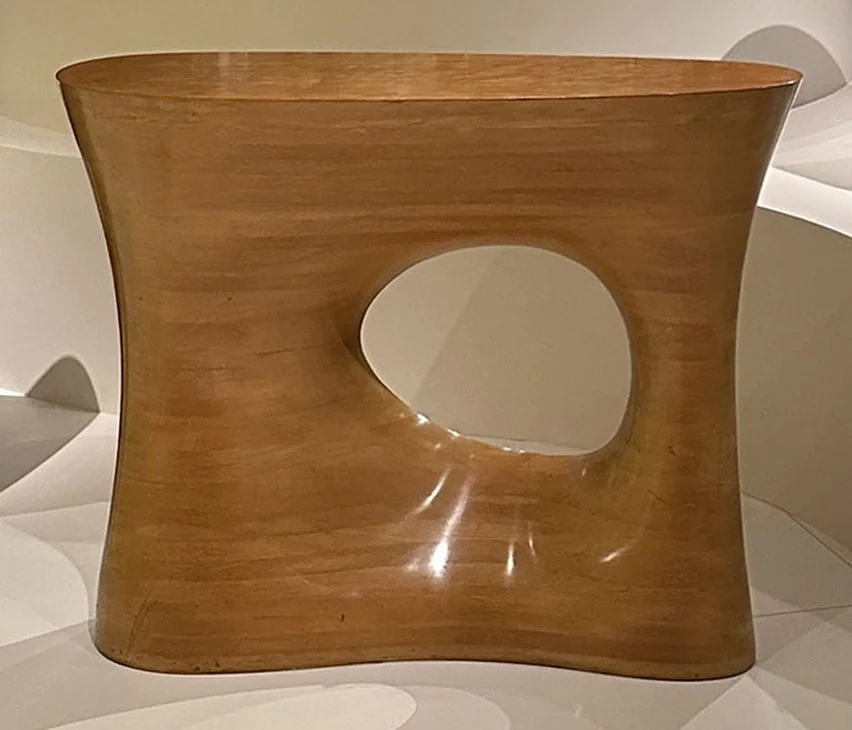
Table (1941)
Design versus Art
He was peripatetic, like Leonardo DaVinci, also famous for designing things, from airplanes to fortifications. Where the vehicle for Leonardo was the drawing, or what in Italian would be called the disegno, in other words, design, drawing does not appear to be the vehicle by which Noguchi's objects were conceived. His drawings are later expressions of ideas conceived otherwise, sculpturally most often, through direct interaction with the material. In this sense he was right. He was not a designer. Design merely followed the artistic act, necessary for industrial production say, for the furniture by Herman Miller or Knoll International.
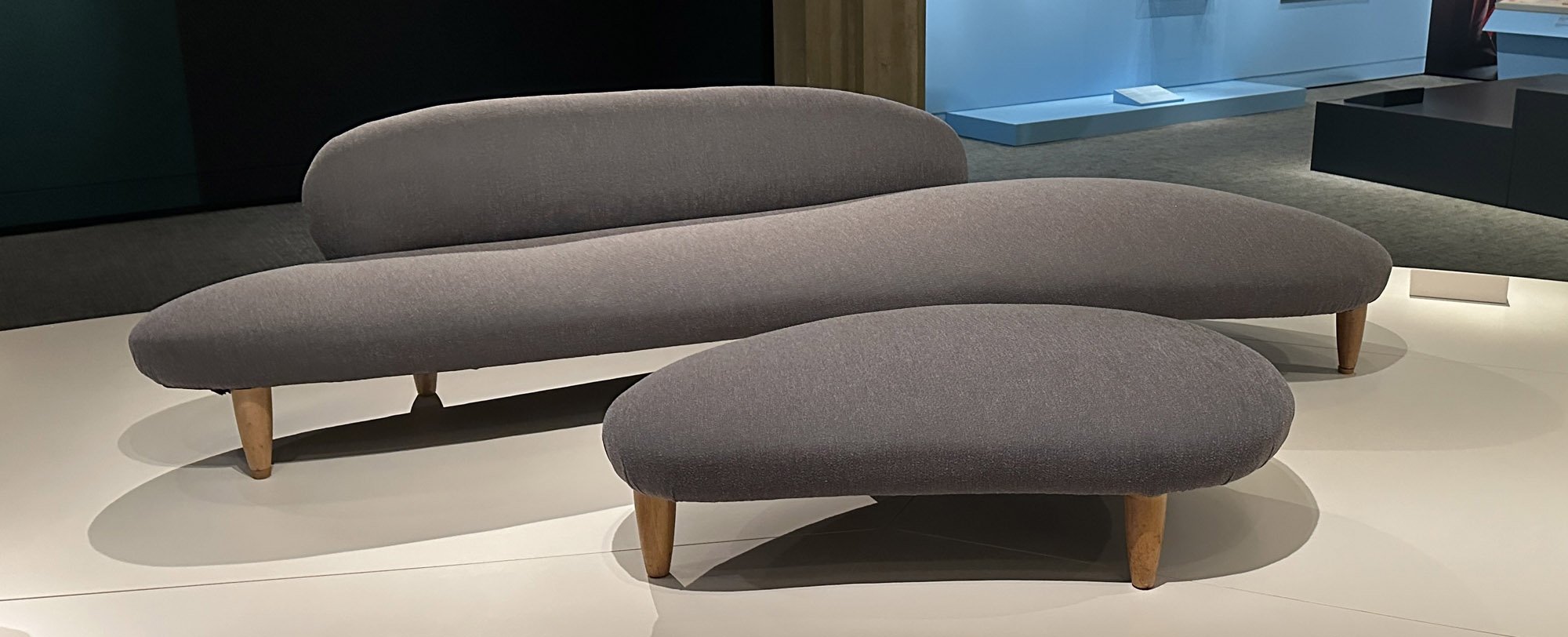
Free Form Sofa (1949)
The Natural
There is an overwhelming sense of nature and time in his work. This can be seen not only in the implied effect of natural forces over time, as in the laminated wooden table, worn through like a rock formation, or the sofa whose form has been dictated by the forces over time that have shaped it.
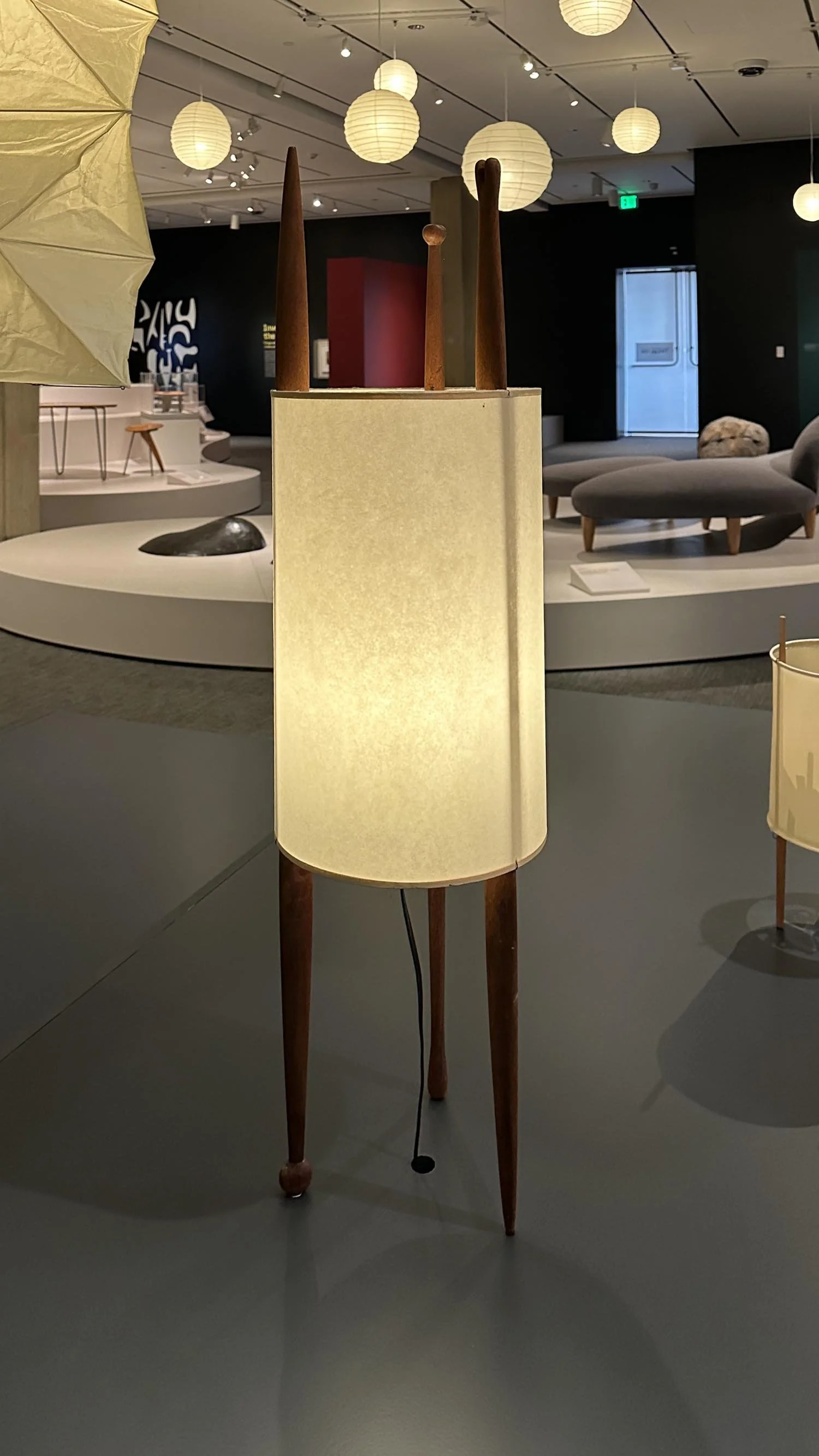
Three-legged Cylinder Lamp (1944)
The Primitive
And, there is another aspect of time, millennial time, where the primitive appears contemporaneously with the modern, as seen in the rice paper lamps. Despite the mid-century fascination with the primitive, it would appear to me from this exhibit, that Noguchi was concerned not with the anthropological implications of social thinking, but with the relationship between art and nature; how the natural world comes into our own, through varying technologies and mimetic motives, regardless of the means.
Nowhere is this more beautifully expressed than in the Constellation: for Louis Kahn for the Kimball Art Museum. Created after Kahn's death, it is a series of stone menhirs, randomly emerging from the ground, to become, with their partially drafted edges, the beginning of a human inscription of place.
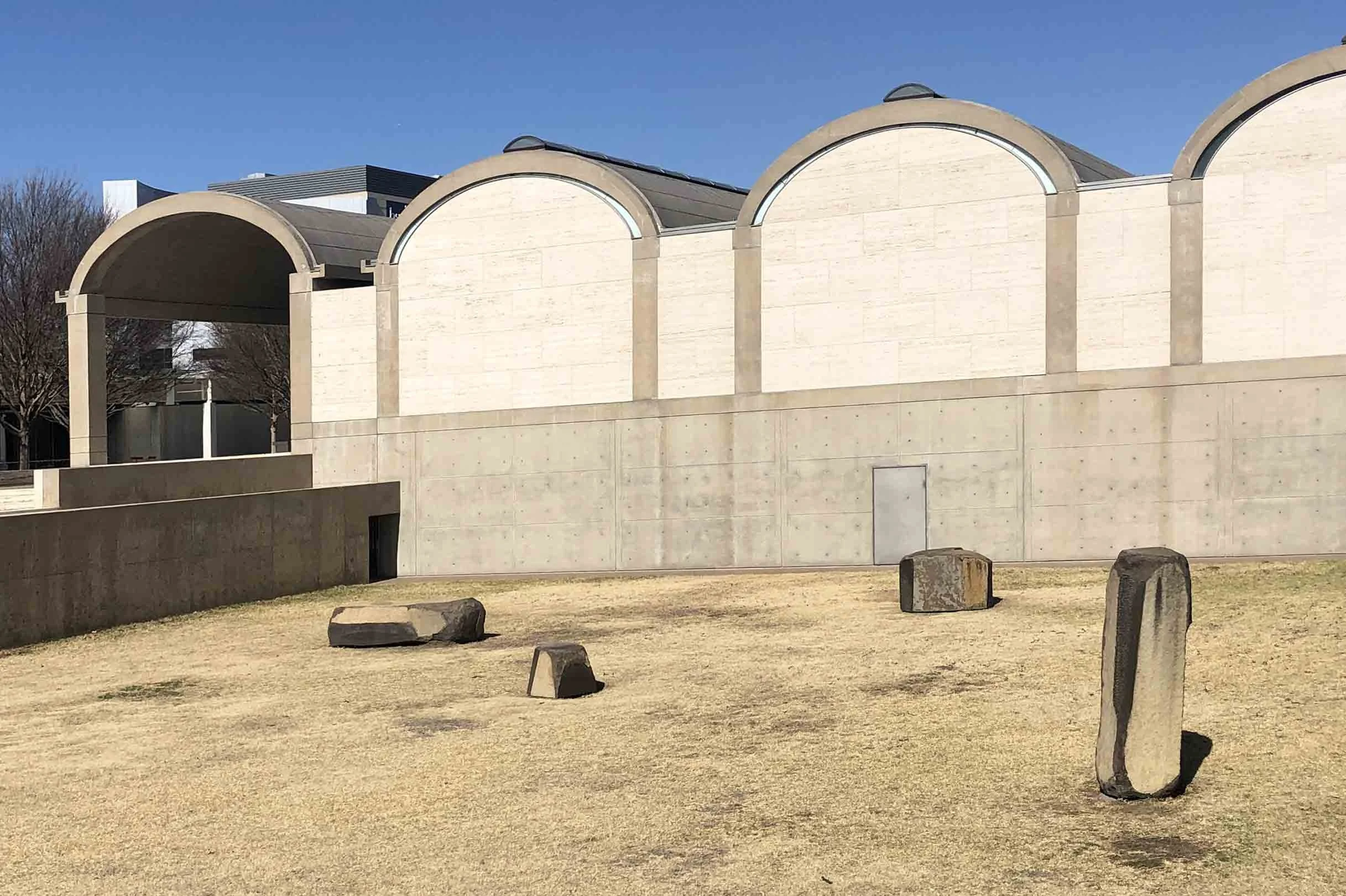
Constellation: for Louis Kahn (1981-83)
This would have pleased Louis Kahn, who believed that stones, like bricks, always wanted to be an arch.
*Isamu Noguchi: "I am not a designer" at the Peabody Essex Museum is on view from September 19, 2026, through January 3, 2027.