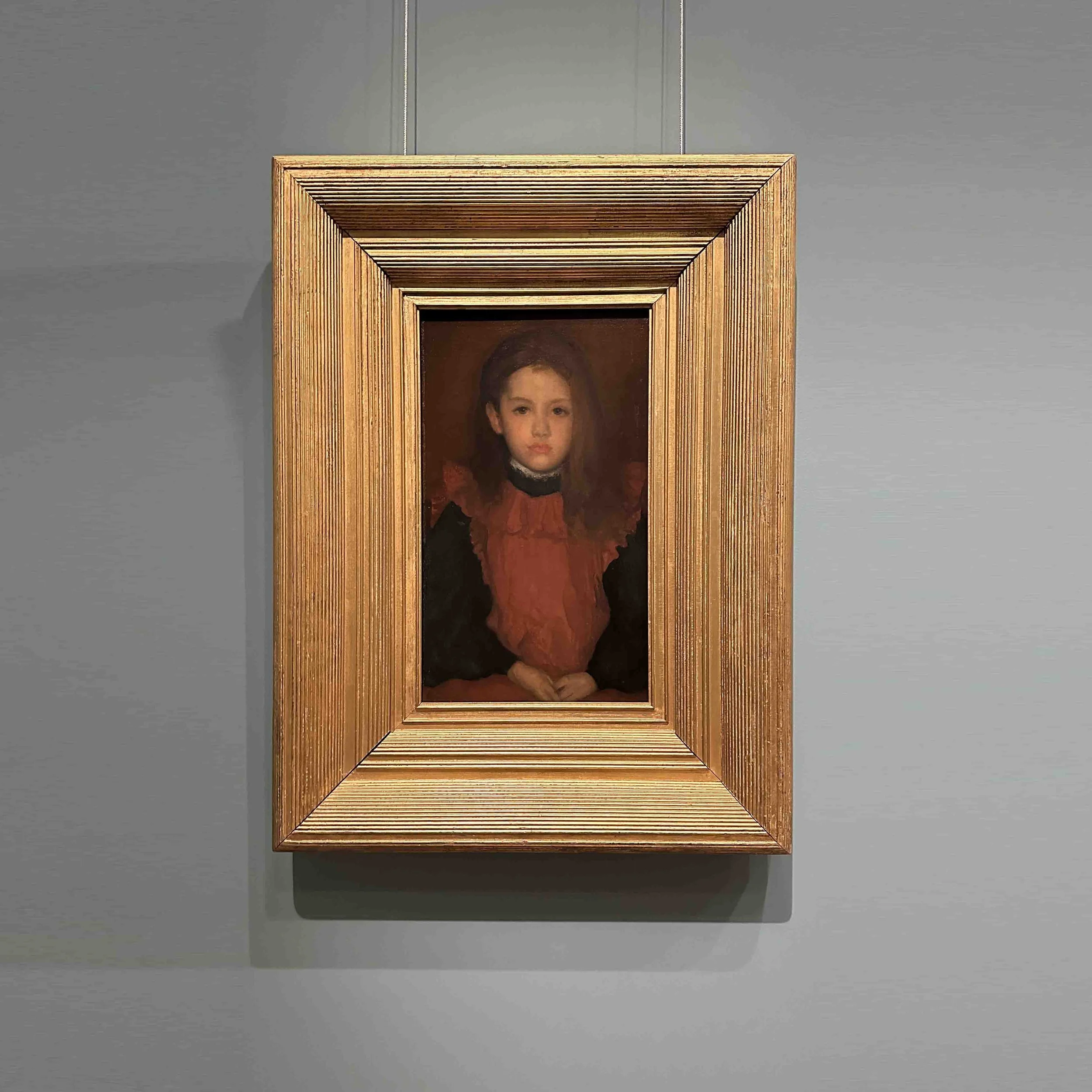
Whistler's Little Rose
James McNeil Whistler’s Little Rose of Lyme Regis (1895) is one of my favorite paintings. It’s at the MFA in Boston. I usually go to see it after looking at the Copley’s and Sargent’s, in the American Wing. Its intimacy is so charming and alluring. Whistler made, or had made, the frame itself, so that Rose seems to sit even farther away than her already defiant demeanor suggests, a projection of the distance at which she prefers us to remain.
This is one of the few paintings by Whistler that has no precursor in its title, such as the famous painting of his mother, titled Arrangement in Grey and Black No. 1, or Nocturne in Black and Gold, The Falling Rocket. The last painting was the subject of a famous lawsuit by Whistler against John Ruskin, the preeminent art critic of the time, who had accused Whistler of "flinging a pot of paint in the public's face." Whistler sued for libel, and won. And yet more interesting than the accusation of libel was Whistler's argument for an experiential interpretation of art, along the lines of the Aesthetic Movement, which favored "art for art's sake."
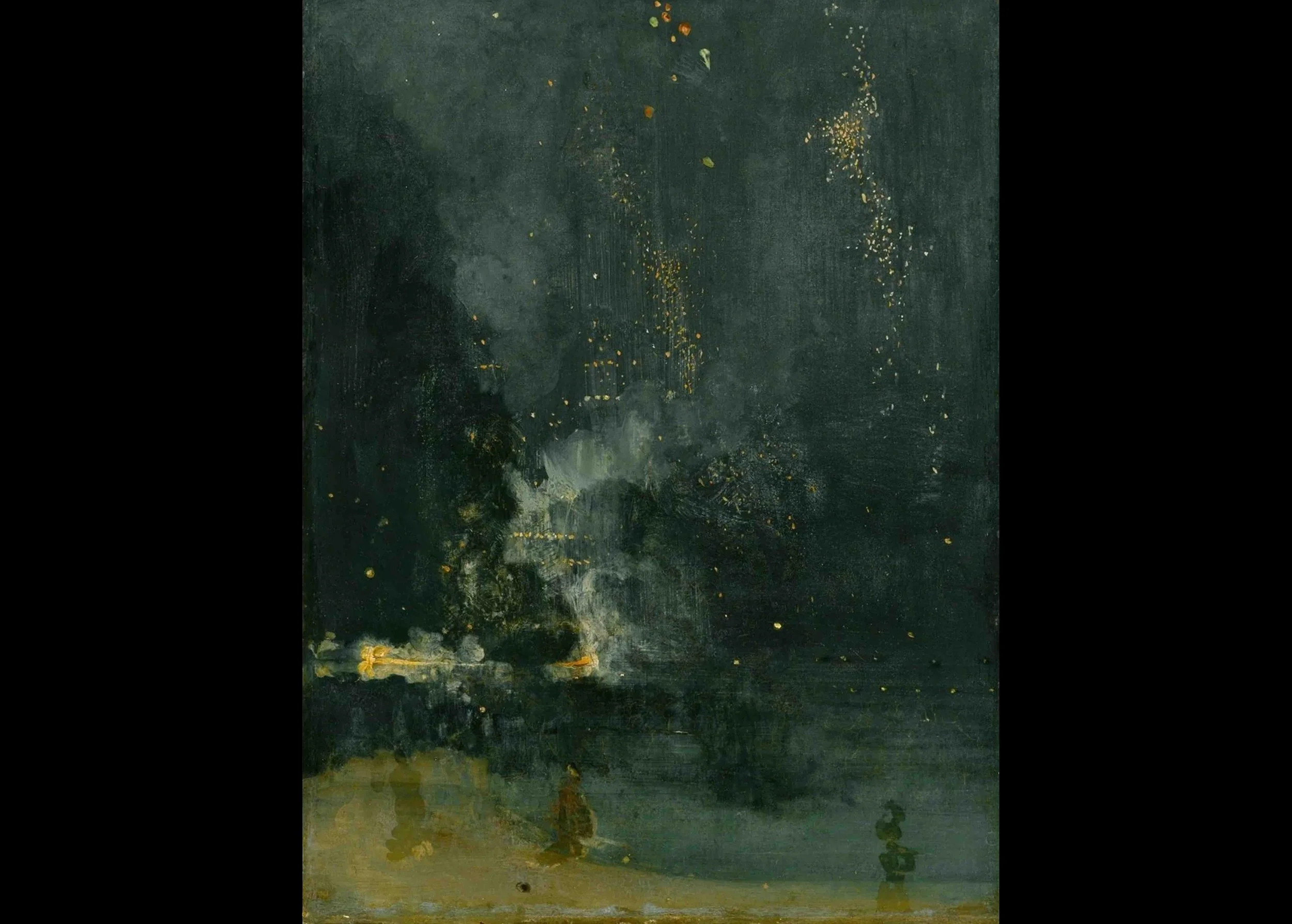
Nocturne in Black and Gold, The Falling Rocket (ca. 1875)
Another way of saying this is that the emotional power of a painting comes from the experience of the painting itself, and not necessarily from its subject. Hence, the two-part title, with the former describing the paint itself (Grey and Black) and the latter noting the subject. This would be de rigueur by the mid-20th century, when the subject had been removed altogether.
A tonalist, Whistler worked in highly reduced color palettes, thin layers of glaze, with deepening tones, so that only the most memorable remains clear, in this case---Rose’s immutable stare. Anything else is only inferred. Look, for instance, at Rose's hands tightly gripped at the bottom of the painting. We imagine her elbows tightly gathered, as if trying to fit into the narrow frame. And yet, as we look closely, it is merely our imagination, as her arms lie in an immeasurable field of black.
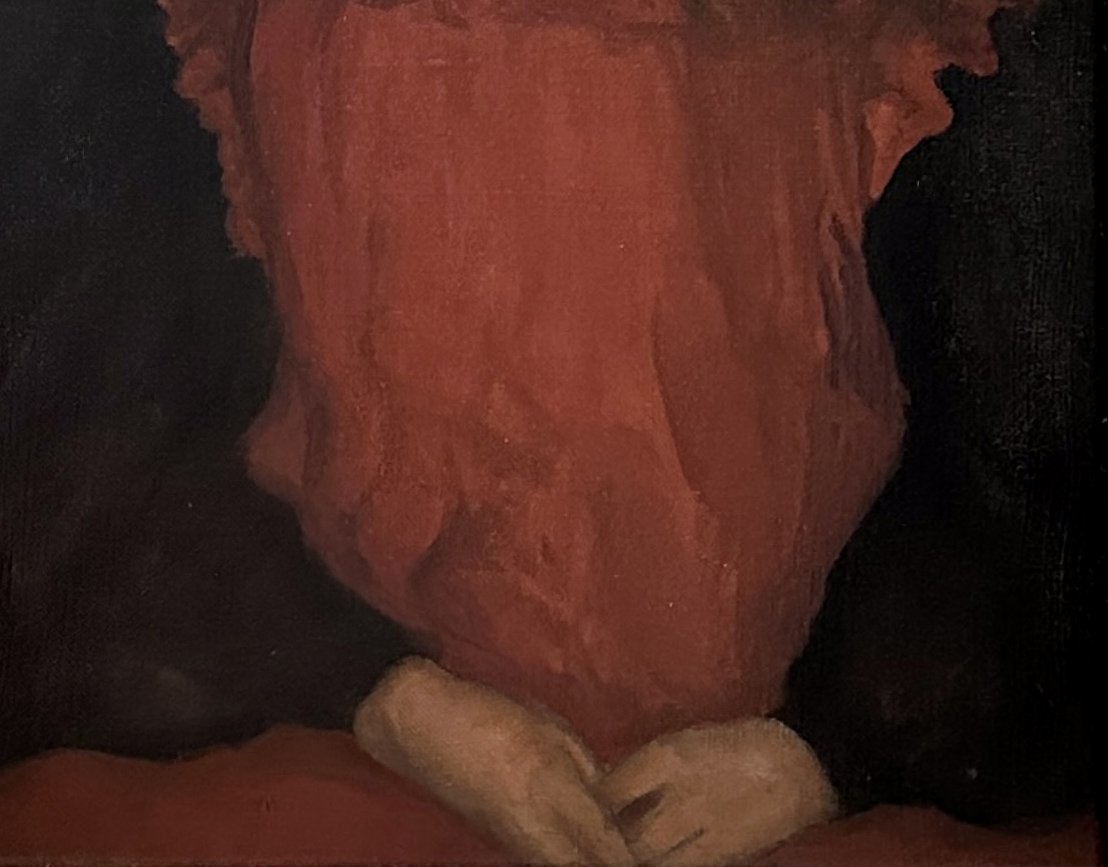
Perhaps this painting might have been titled, Study in Black: Little Rose.