The Artful Lie
If architecture is not the same as building, then what is it?
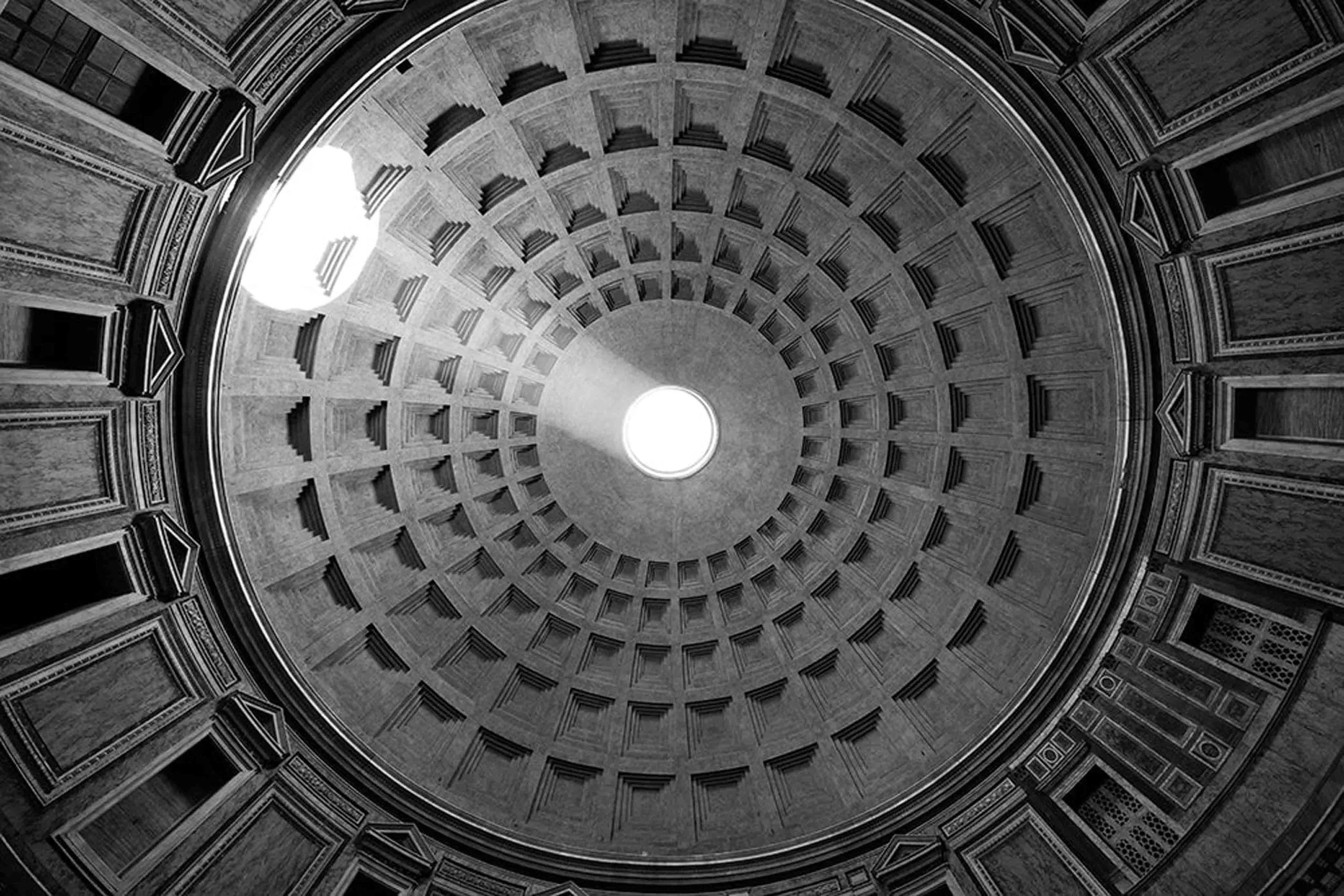
The dome of the Pantheon (128 AD) was the longest concrete span in history until 1935*. How is it that the Romans were able to create a span of 142 feet in concrete, without the use of any reinforcement, all while keeping the oculus at the top open, such that light would shine on the emperor as he entered on April 21st every year to celebrate the founding of Rome?
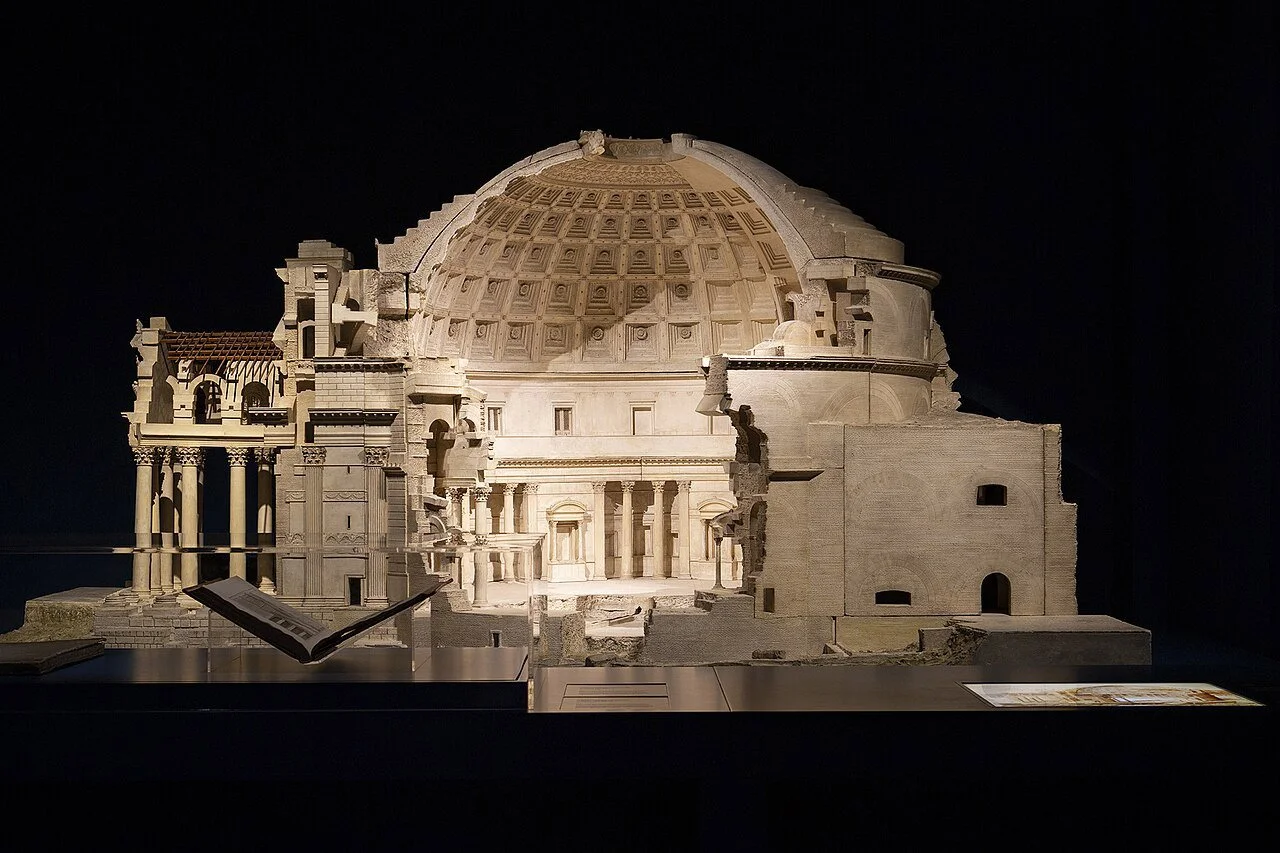
The answer lies in the coffering, that is, the receding panels or trays that form a series of vertical bents and circular compression rings that allow the structure to be strong enough to support itself while at the same time being light enough not to collapse.
Note that this coffering is created by formwork, which once removed, reveals the impression of a structure made of otherwise inert material, without which it could not exist. It is the difference between the material and the idea that organizes it.
Alberti’s Lineamenti
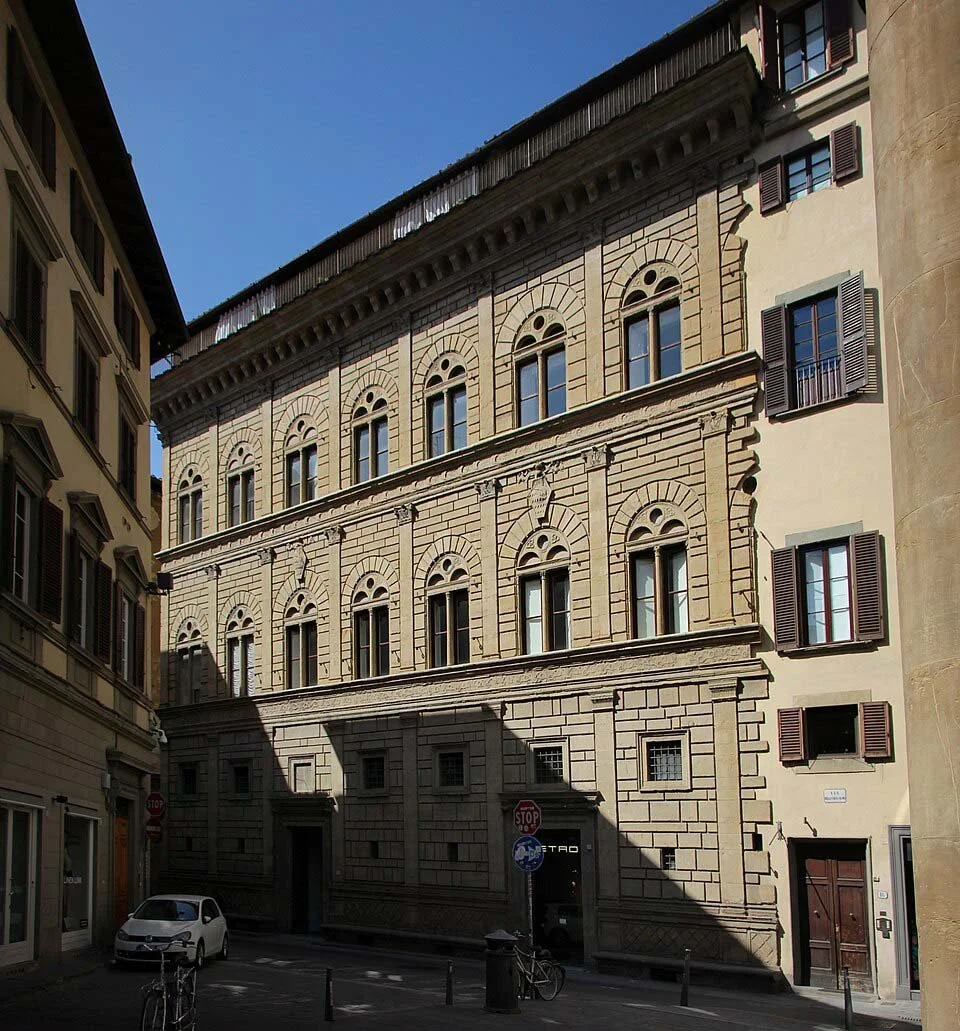
The 15th-century architect Alberti defined this condition as Lineamenti, when describing the difference between architecture and the material of construction. Take for example, his polemical work, the Palazzo Ruccelai, in Rome (1446-1451). Here the facade suggests a structure of pilasters, entablatures, and window arches, and yet as we can see (in the photo below), this is only a stage set, inches deep, and made entirely of stucco. Behind this facade lies a rubble structure, common at the time, by which most contemporary buildings were constructed.

Alberti would argue that the facade, with its liniamenti, has organized the actual structure behind, determining where openings could occur, thereby rationalizing the structure itself.
God is always looking
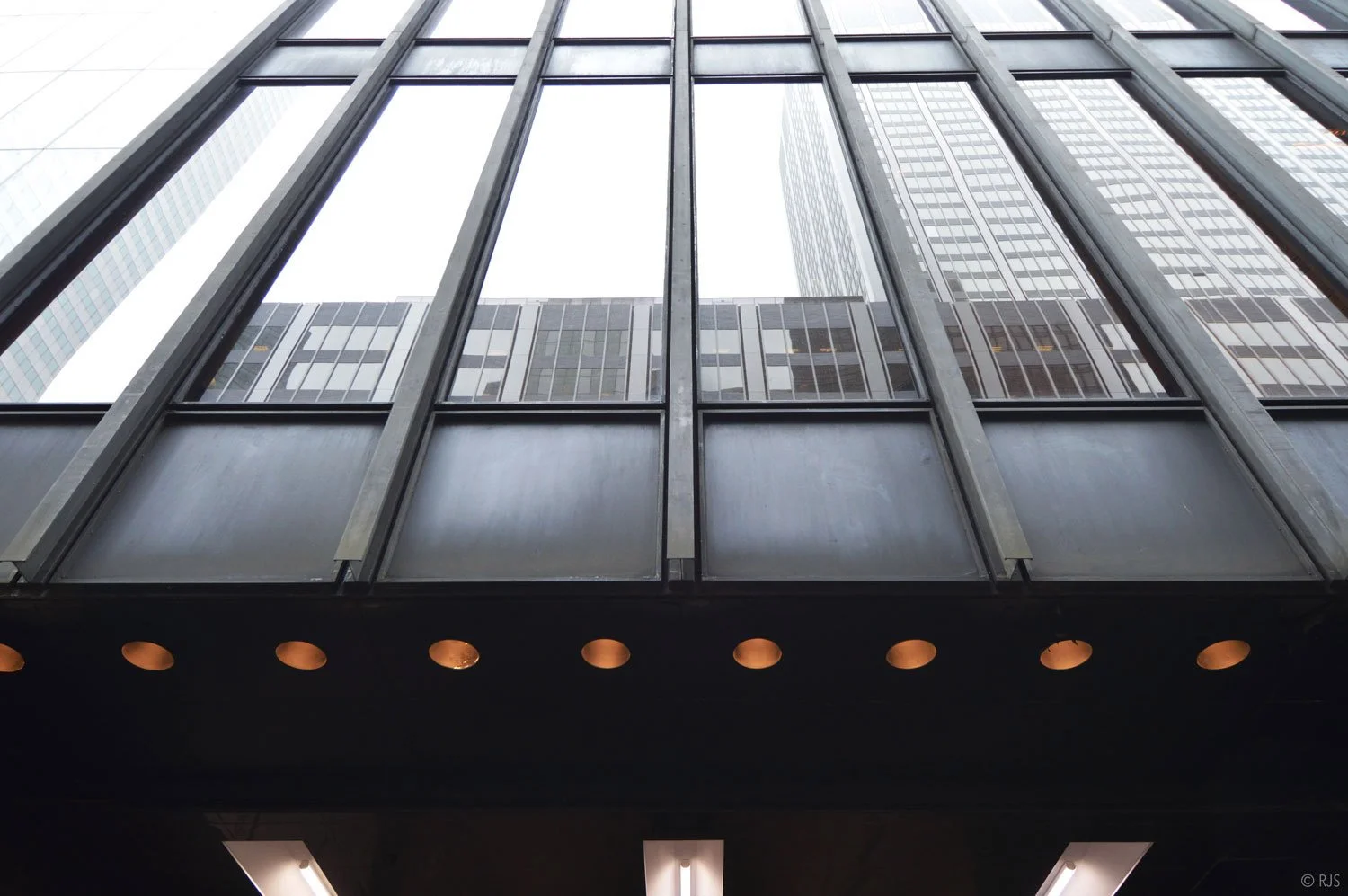
This idea has been embedded in architecture at least through the better part of the 20th-century. Take for example, the bronze I beams applied to the exterior of Mies van der Rohe's famous Seagram Building (1958) in New York City. These have no structural purpose, but rather signal the actual I beams that are invisible in the fire-proof concrete behind.
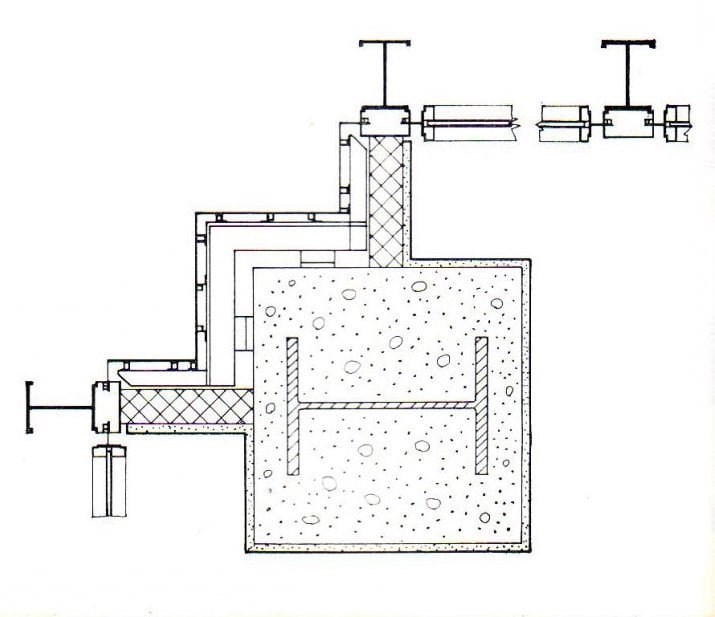
Any architect trained in the last century (including myself) will have internalized this need to clarify the structure of a building through a set of indices that refer to the actual structure. It is here that notions of truth and authenticity were born, with almost religious fervor, as Mies van der Rohe famously said, when asked why the travertine deck of the Farnsworth House had to be polished on the underside, even though no one could see it. "God can see it," he said.
Post Structuralism
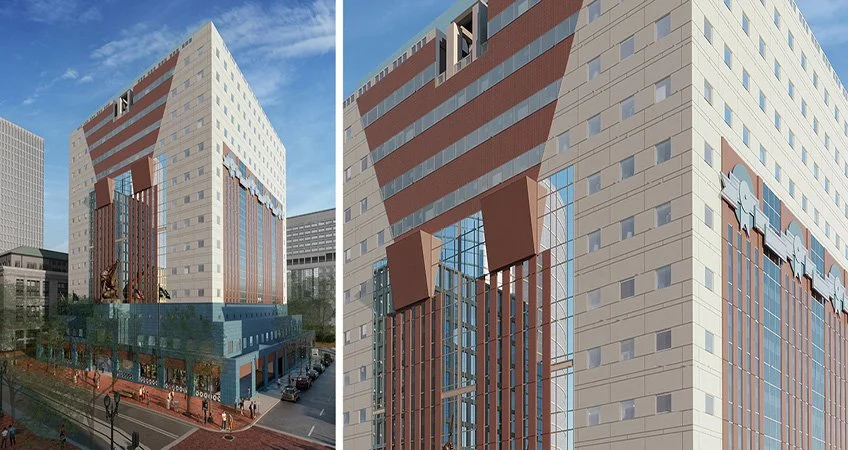
Much of this changed in the later part of the 20th Century with the advent of Post-Modernism, where the Albertian idea was employed not to reveal an actual structure, but rather a virtual structure, more referential or symbolic in nature. An early example is Michael Graves' Portland Municipal Building (1982), which features two apparent multi-story pilasters supporting a giant keystone. This, against a fairly conventional office structure, with ordinary, punched, and ribbon windows, built on a regular steel frame.
The Column no Longer
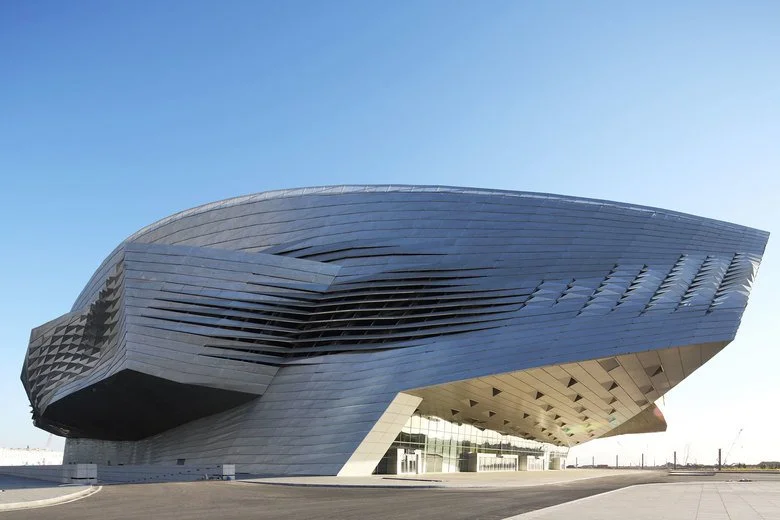
To me, it is interesting that the Dalian Center (2012) by the Viennese firm Coop Himmelblau, in its organic form, has a closer relationship to its structure than a more conventional building. In this case, it relies on a kind of endoskeleton that closely supports its skin, in which openings, rather than being windows, are more like gills on a fish.
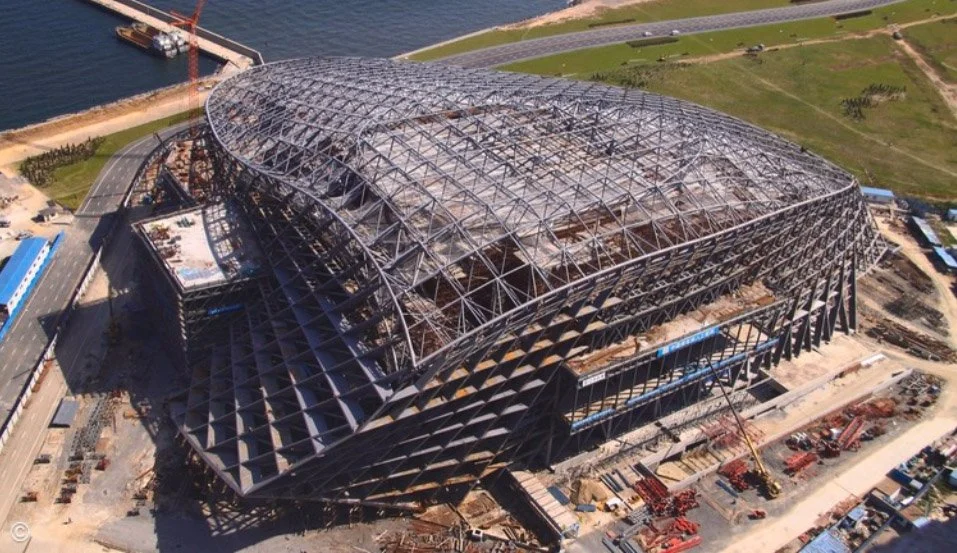
Why does this interest me? Perhaps it's because the rules in architecture are forever changing. Unlike law or medicine, to which architecture is sometimes compared as a profession, the rules of architecture shift more along the lines of literary theory, such that it is an interpretation of something, and not the thing itself. As with literary theory, it has gone from structuralism to post-structuralism.
Whether it is through Vitruvius or Derida, architects search for meaning in what they do, apart from making buildings, for which they are not entirely required. They look for ideas upon which the material itself is formed, because architecture, at the end of the day, is like art, and as Picasso once said,
"Art is a lie that makes us realize truth."
*Aircraft shelters for the Italian Royal Air Force, by Pier Luigi Nervi, Orvieto, Italy, 1935