Art and Design: Isamu Noguchi
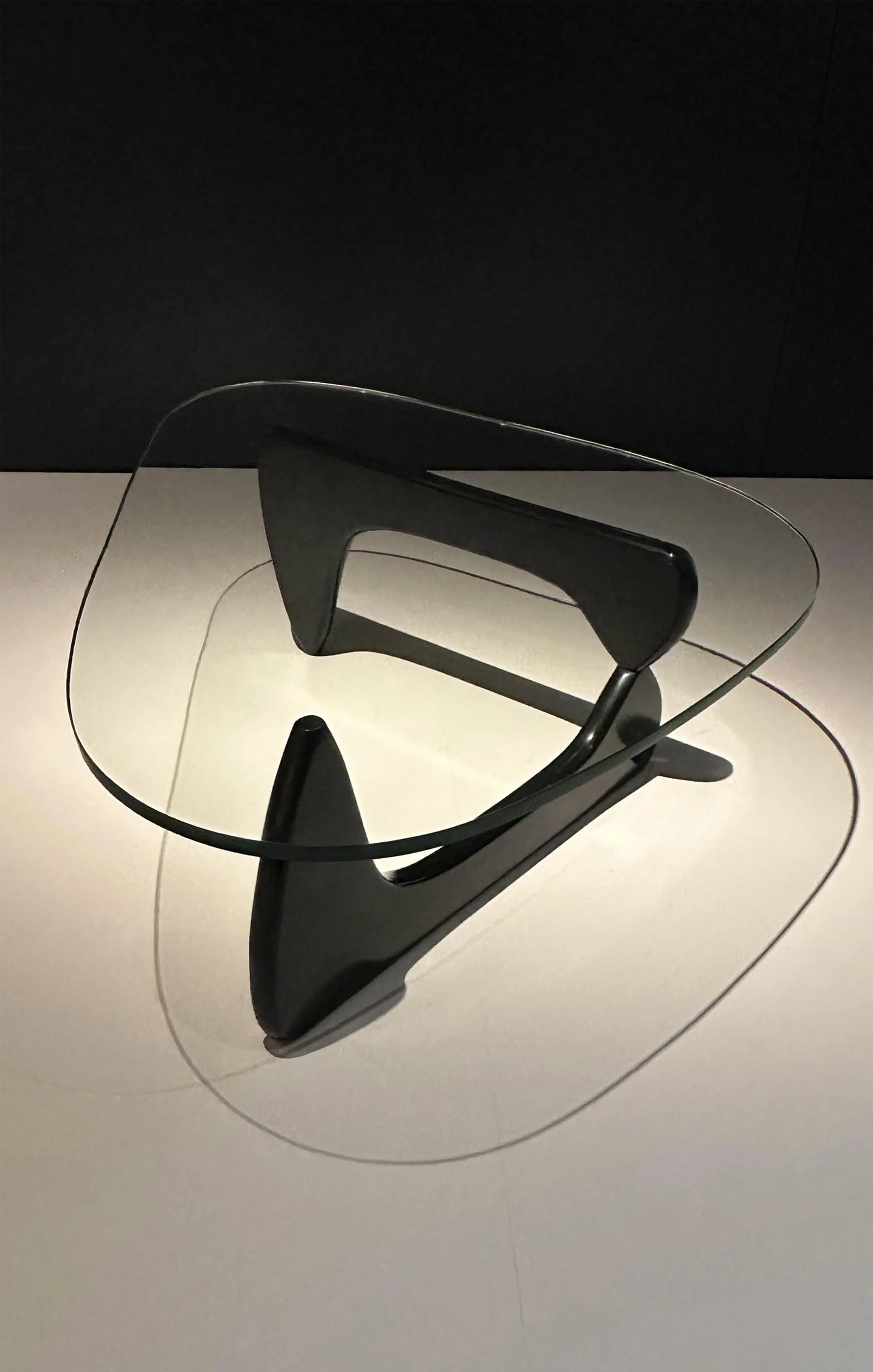
IN-50 Table (1944)
Art and nature - the natural world reflected
Objects as Artifacts
To see a broad expanse of Isamu Noguchi's work, now in an exhibition at the Peabody Essex Museum, titled, I am not a designer* is to have a lens into American social consciousness. Curves reminiscent of Miro, the weightlessness of Calder, contrapposto in space flight. These objects are a vanguard for a generation coming of age in the 1960s. There might be a grandmother’s sideboard in the dining room, a highboy in the living room, but the presence of the IN-50 table speaks of the future. One imagines couples sitting on the floor, hip to modern life, experimenting with transcendental meditation, marijuana, and free love---the stuff of a John Updike novel. Noguchi's industrial designs are artifacts, cultural insignia of the times, aspirations and myths, liberated by technology, and yearning for "open space" floor plans.
Noguchi was peripatetic, and while claiming not to be a designer, he was, like Leonardo DaVinci, famous for designing things, from furniture to lighting, to architecture, landscape and theater. The difference may be that where the vehicle for Leonardo’s inventions was drawing, or what in Italian would be called the disegno, in other words, design, it does not appear to be the vehicle by which Noguchi's objects were conceived. Instead, his drawings appear to be expressions of ideas conceived otherwise, most often, and through direct interaction with material; wood, stone, earth, ceramics, fabric, rice paper or light. Design followed only when necessary for industrial production of say, for the furniture by Herman Miller or Knoll International.
“Techne” versus Art
Most of us know him through the enormous success of his commercial designs. Yet it is interesting to consider his resistance in, “I am not a designer,” where he also said, “I have always disliked the idea of art as decoration."** The idea of art as a therapeutic dose persists today, as say in “One Percent for Art.”
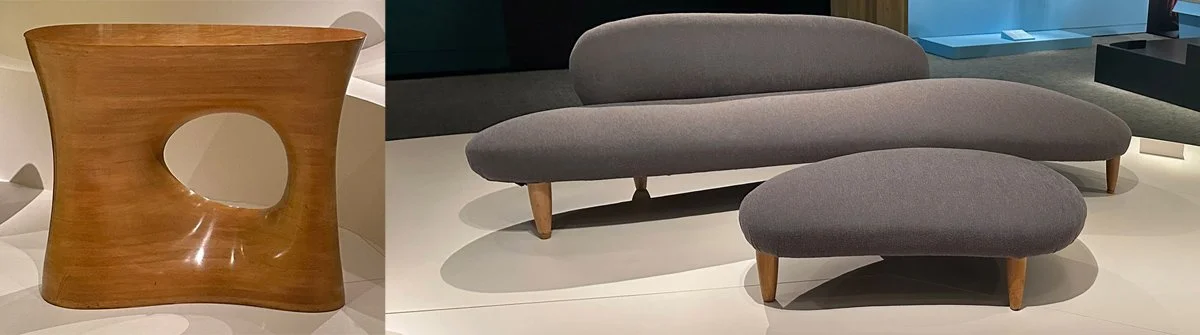
A Table (1941) and a Free Form Sofa (1946)
There may be something else Noguchi was attempting to say here, maybe not only that he was not a designer, with all of its commercial and industrial implications, but also not an artist, with its platonic or metaphysical implications. In other words, he was a maker of things; things that both in their making and utility, were about life itself. In this sense, he was more aligned with the ancient Greek concept of “techne,” which did not recognize the concept of art as a separate, autonomous category of human expression. To see Noguchi at work is to see someone not so much in a studio but in a workshop, where things emerge from nature and from the nature of the tools themselves.
Nature and Time
This idea of the natural and how it comes to be formed for our purpose, without losing its natural properties, is a recurring theme in Noguchi’s work. So is time itself, in the “weathering” of the wood side table or the long free form sofa, time shapes these objects as a reflection of natural forces through time.
There another aspect of time as well, millennial time, in the appearance of the primitive entwined contemporaneously with the modern. It would appear to me that Noguchi was not so much concerned with anthropological implications, but with how things are made, with primitive tools or modern tools, traditional methods or industrial methods, and with the continuing presence of totemic and mythological symbolism. This seemed to ensure not only the survival of the species but a belief in a future enabled by modernism. Our current “post-modern” and “post-historical” view is more cynical. Yet Noguchi seems to have found a way to embody time and memory into what otherwise had become an age of amnesia.
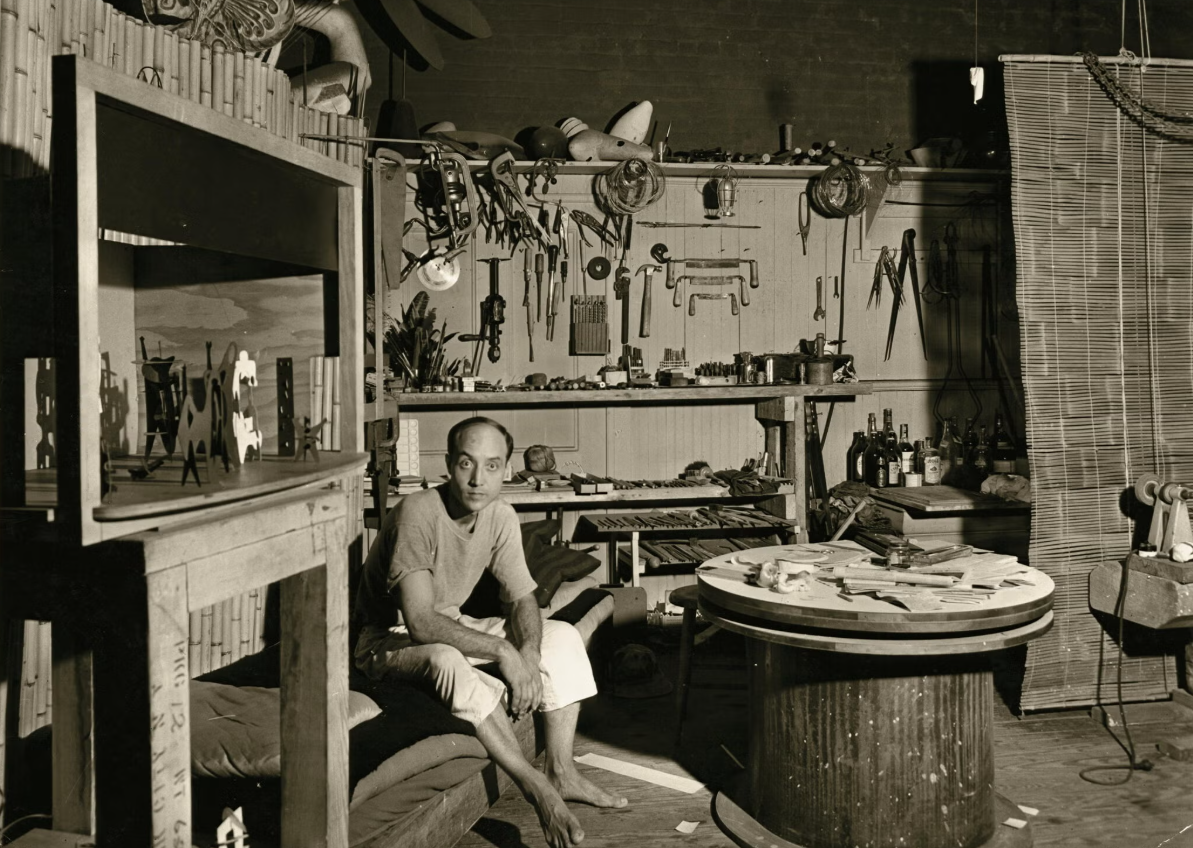
The Isamu Noguchi Foundation and Garden Museum, New York/Artists Rights Society; via The Noguchi Museum Archives; Photo by Eliot Elisofon
At the Kimball Art Museum in Fort Worth Texas, there is a garden, the Constellation: for Louis Kahn, designed in memory of the famous architect of the museum. Jenny and I visited it during COVID while around the country in our Airstream. I was overcome. Perhaps it was a nostalgia for the time, or the beauty of both the building and garden. Primitive and timeless, they appeared to be unaffected by time, unlike today, where everything deteriorates according to a depreciation schedule. Created after Kahn's death, Constellation is a series of stone blocks, emerging from the ground, with their edges partially hewn, to form an inscription of place.
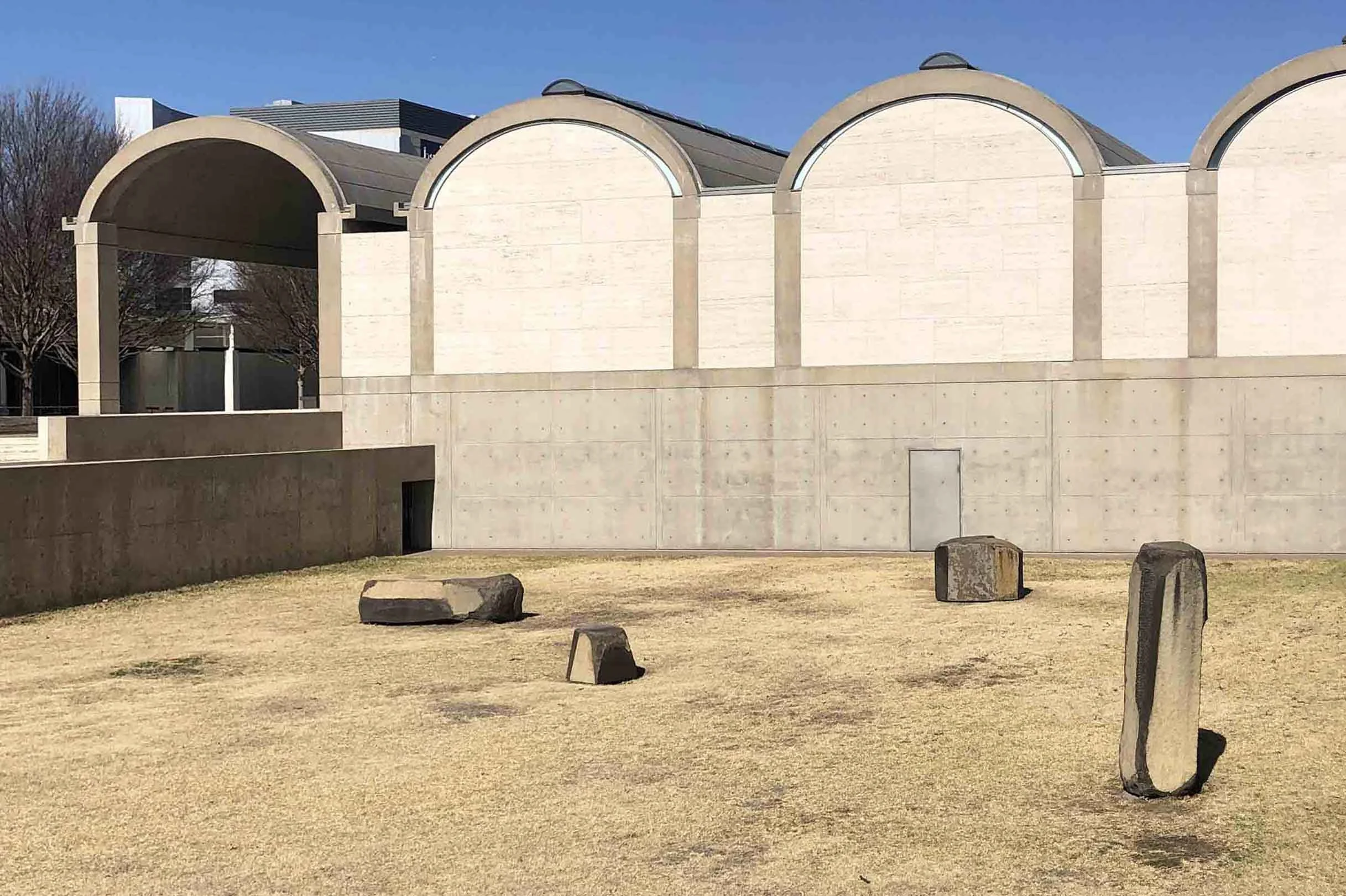
Conselation: for Louis Kahn (1981-83)
It would have pleased Louis Kahn, who believed that in building, all materials are in the process of becoming, like bricks, always wanting to be an arch.
*Isamu Noguchi: "I am not a designer" at the Peabody Essex Museum is on view from September 19, 2026, through January 3, 2027.
**"From an Interview with Isamu Noguchi," The League Quarterly 20, no. 3 (Spring 1949): 8